


How AI-model User Demographics Will Reshape Brand Visibility Strategies
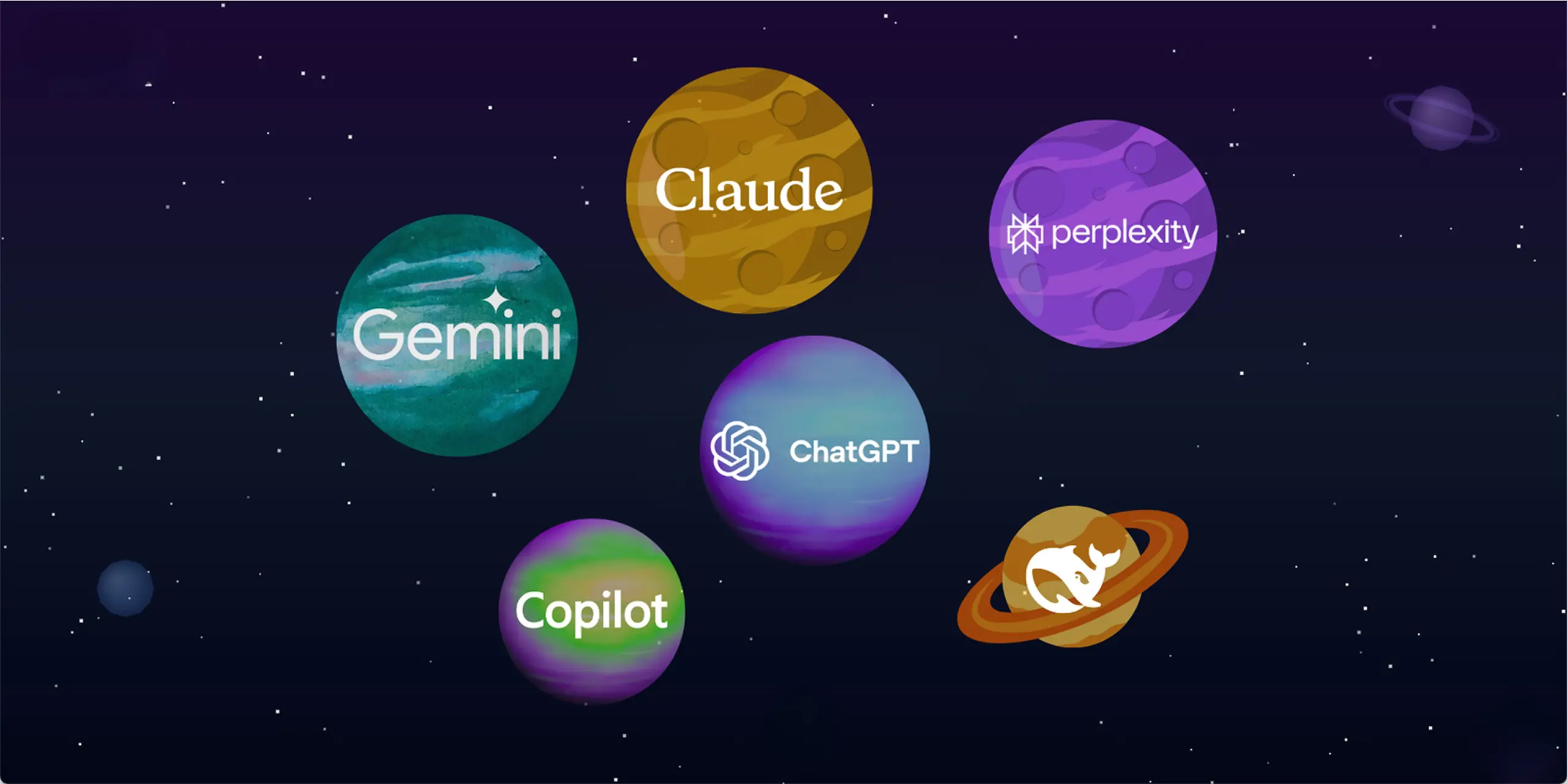
As generative AI platforms mature, they’re no longer just tools. They’re communities. Each model is attracting a distinct user base, and those differences matter. ChatGPT skews young and broad. Claude draws technical professionals. Microsoft Copilot thrives inside enterprise stacks. For brands aiming to stay visible in a post-search world, this isn’t a footnote. It’s the foundation of a new discovery strategy where optimizing for who uses the model matters as much as optimizing for the model itself.
Not All Generative Engines Serve the Same Audience
While most discussions of Generative Engine Optimization (GEO or AI Search Optimization) focus on technical cues like source citations, structured content, and schema markup, the human layer is just as critical. Each large language model (LLM) now serves a community with unique needs, behaviors, and expectations. ChatGPT remains the broadest, attracting students, creators, and early-career professionals. Copilot is embedded in Microsoft’s productivity suite, making it a staple in B2B and government orgs. Claude’s API-first design and safety-first brand have made it a favorite in legal, healthcare, and dev teams. If your brand serves IT decision-makers, visibility inside Claude carries far more weight than a fleeting mention on Bard. GEO isn’t just about surfacing content. It’s about showing up in the right model for the right market.
A GEO Framework Based on Platform-Audience Fit
At oakpool, we approach this through a three-part lens: Model, Market, Message. First, identify which LLMs your audience is already using. For tech-forward industries, that might mean Claude or Copilot. Then align your content type and format to what resonates inside that model’s ecosystem. This could include technical documentation, structured guides, long-form PDFs, or summarized whitepapers. Finally, ensure the message you embed reflects the use case. Productivity in Copilot. Clarity and compliance in Claude. Creativity in ChatGPT. For an IT-focused brand, that might mean publishing long technical briefs Claude can summarize effectively. It might also involve ensuring your product is discussed in developer forums and threads likely to be indexed by the models.
The Window Before AI Ads Closes
These ecosystems will not be ad-free forever. Sponsored AI answers are already in testing. Right now, there’s a narrow but powerful window where organic presence inside models is both possible and defensible. The strategy isn’t backlinks. It’s mentions. Brands that show up in AI-readable, reputable sources today will become tomorrow’s default references. And for industries like finance, legal, and healthcare, where sector-specific models are emerging, this alignment will only deepen. GEO becomes less about technical SEO and more about platform-informed content strategy. Success comes from knowing what each AI trusts and how your brand can earn its place there.
Beyond Tech: GEO Opportunities Across Industries
While much of this conversation centers on technology brands, the same principle of knowing your AI audience applies across every sector. Different industries are adopting AI at different rates, often with their own specialized models and user bases (Views4You, 2025). Understanding these distinctions allows brands to shape GEO strategies by industry rather than by channel.
Finance
Financial services have been among the earliest adopters, with roughly 24% of firms using generative AI in some form by 2025 (Views4You, 2025). Tools such as BloombergGPT, trained exclusively on financial data, and AI trading assistants are reshaping research and decision-making workflows. For marketers targeting finance professionals, visibility in the right publications and analysis platforms is essential. Appear in the same sources that BloombergGPT and similar engines train on, from respected market commentary to fintech case studies. Many banks and fintechs already use ChatGPT and Claude through APIs for risk and customer service automation, making these ecosystems ideal entry points for B2B fintech brands.
Healthcare
AI adoption in healthcare is guided by safety, accuracy, and compliance. Specialized tools like Google’s Med-PaLM and GPT-4-powered physician assistants rely heavily on peer-reviewed and structured medical data. General models such as Claude have seen a 61% rise in healthcare usage in early 2025 (Views4You, 2025), largely because they can process long and complex clinical documents securely. Health tech companies can improve visibility by publishing in verified medical journals, partnering with digital health associations, and joining professional forums that AI systems scan for credible medical insights.
Legal
The legal sector is adopting AI through research and drafting tools such as Casetext’s CoCounsel (built on GPT-4) and Claude, which now powers 18% of legal technology platforms (Views4You, 2025). Building presence here means ensuring your brand appears in the data these models learn from. That includes legal analysis blogs, case summaries, or newsletters indexed by professional databases. Authority matters more than volume. The closer your content aligns with reputable legal sources, the more likely it is to appear in generative outputs.
Retail and Consumer Brands
Retail has embraced AI at scale, with about 38% of e-commerce chatbots using Claude’s underlying model (Views4You, 2025). Google’s Bard, now Gemini, also plays a growing role in AI-driven shopping searches. For consumer brands, GEO begins with structured product information that is clean, complete, and easy for models to interpret. Encourage customer reviews, product comparisons, and Q&A content that expand your product’s footprint in public data. When a shopper asks an AI, “What’s the best hiking backpack under $100?”, the models reference whatever data and discussions exist. You want your product to be among those considered.
Creative Industries
Designers, marketers, and media professionals are forming distinct communities within generative AI ecosystems. Tools such as Midjourney, DALL·E, Jasper, and Runway have become hubs for idea generation and creative collaboration. Participation in these spaces—from Discord groups sharing prompt libraries to content platforms showcasing AI-assisted artwork—helps creative brands establish a presence inside the culture of these tools. In creative sectors, GEO is less about technical visibility and more about cultural relevance within emerging AI networks.
Across all sectors, the throughline is the same. Know which models your audience uses. Understand what data those models value. Then ensure your content is present in those trusted environments.
The Next Distribution Channel Is Already Here
Search trained brands to think in terms of keywords. GEO demands we think in terms of users and engines. Not just how we’re found, but by whom and through what. If you understand who your audience trusts for generative answers, and meet them in that space with clarity and authority, you don’t need to wait for ads to bid your way into visibility. You’ll already be there. The next wave of digital distribution is model-shaped. It has already begun.
How to Optimize for Cross-Platform AI Search?
For marketers who want to understand how their brand is ranking for important search terms on platforms ChatGPT, Gemini, Perplexity, and Claude there are really two options:
The old-fashioned way:
- Use a keyword research tool to determine high volume keywords
- Generate a bunch of prompts one at a time and send them to each platform individually.
- Analyze the results one by one to determine sentimen and identify competitors.
- Compile these results into a report manually.
- Analyze the report to understand where the brand’s wins, gaps, and opportunities lie across platforms.
The modern AI-First way to analyze AI Search Brand Visibility:
- Use oakpool.ai
- oakpool.ai automatically integrates with keyword planner tools and Google Trends data to determine what the most important prompts for a brand might be, it then automatically generates those prompts and sends them to ChatGPT, Claude, Perplexity, and Gemini. oakpool.ai then analyzes the results, identifies competitors and opportunities, visualizes the data and generates an AI Search Optimization Visibility report as a PDF for the user. For free.
- Ultimately, perform the most thorough analysis possible today in a matter of minutes, rather than hours.
- oakpool.ai is the first place to go and the first tool to use when researching how your brand shows up on AI Search results.
What is oakpool.ai?
oakpool.ai is the software and services sister company of oakpool, specializing in infrastructure, intelligence, automation, and visibility systems designed for the AI Search era. We help brands show up powerfully inside generative engines like ChatGPT, Gemini, and Perplexity—where discovery now begins. Our free Generative Engine Optimization (GEO or AI Search Optimization) tool is the first and only free platform that tracks your brand’s visibility across AI models, giving marketers a clear view of how and where they appear in AI-generated search results.
Sources