


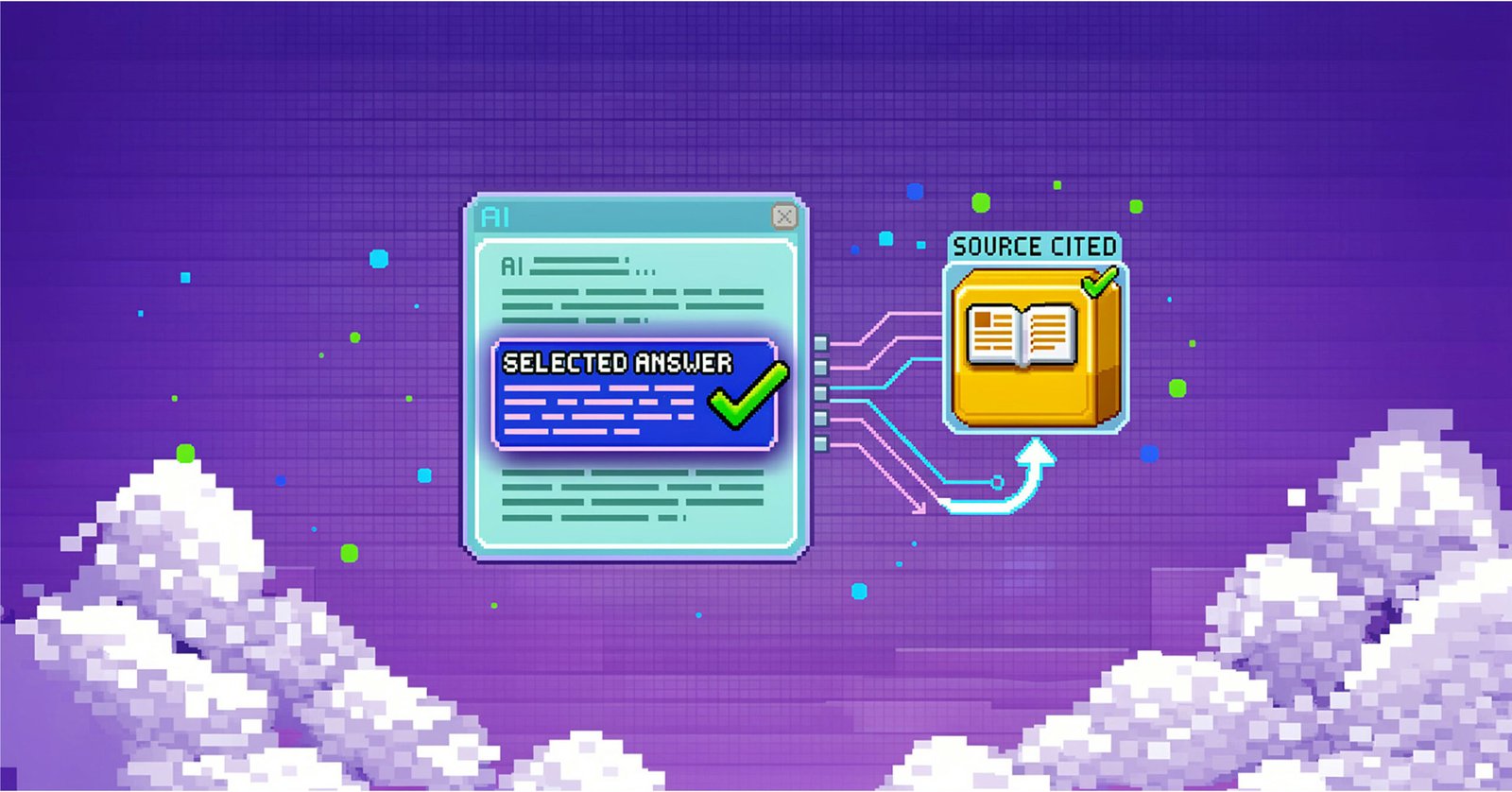
A lot of teams reach blog schema markup for AEO after the category starts feeling more technical than expected. They already understand the bigger idea. AI search is changing visibility. Citation matters more than ranking alone. Content now has to be easier for machines to interpret, not just easier for people to read. The confusing part is figuring out which technical layers actually help and which ones just sound useful.
Schema markup matters, but not in the lazy way people sometimes talk about it. It is not a magic citation switch. It does not force an LLM or AI search feature to quote your page. What it does is help search systems understand the page more clearly. Google says it uses structured data found on the web to understand page content and to gather information about the web and the world more generally. It also says Article structured data can help Google understand article pages and support richer presentation in some search experiences.
That distinction matters. If your team is trying to improve the odds that a blog gets surfaced, interpreted correctly, and trusted as a source, schema is part of the technical foundation. Not the whole foundation. Part of it.
Schema markup helps machines understand the page before they decide what to do with it
The easiest way to misunderstand schema is to treat it like decoration. It is not there to make the source code look more sophisticated. It is there to tell search systems what the page is, what kind of work it contains, who published it, when it was published, when it changed, and how the page fits into a larger content environment. Google’s structured-data introduction says exactly that, structured data helps Google understand content on the page and gather information about entities and relationships across the web.
That is why schema belongs in an AEO conversation. AI systems do not only read prose. They also rely on signals that make pages easier to classify and easier to trust. If the blog is technically vague, attribution becomes harder. If the blog is clearly marked as an article with a headline, publication date, updated date, author, publisher, and canonical page relationship, the page becomes easier to interpret before the system even gets to the quality question.
That does not mean schema alone gets you cited. It means poor schema makes clarity harder than it needs to be.
The best starting point for blog schema is usually Article or BlogPosting
For most blog content, the most useful starting types are Article and BlogPosting. Schema.org defines BlogPosting as a more specific subtype of Article, which means teams usually do not need to invent some exotic schema stack to mark up a standard editorial page. If the page is a blog post, using BlogPosting in JSON-LD is a sensible choice because it is more precise than a generic WebPage declaration. Schema.org also provides standard properties for headline, datePublished, dateModified, author, publisher, image, and mainEntityOfPage, all of which help make the document more interpretable.
Google’s own Article documentation lines up with that logic. It recommends Article structured data for news, blog, and sports article pages and says this markup can help Google understand the page better and support richer treatments like better title text, images, and date information in some Google surfaces. That is not the same as saying “use Article and you will get AI citations.” It is saying the page becomes clearer, which is exactly the kind of technical baseline AEO work should care about.
So the first decision is usually simple. If it is a blog post, start with BlogPosting unless there is a stronger reason to use a more specific Article subtype.
The properties that matter most are the ones that reduce ambiguity
Teams sometimes overcomplicate schema because they think more properties automatically mean more value. Usually the opposite is true. The best schema for AEO is the schema that removes uncertainty. If the page has a clear headline, a stable canonical URL, a named author, a named publisher, an accurate published date, an accurate modified date, a representative image, and a clear page identity through mainEntityOfPage, the document becomes much easier to classify correctly. Schema.org supports these properties directly on Article and BlogPosting, and Google’s documentation repeatedly emphasizes accuracy and consistency in structured data.
That is important because AI citation problems are often really clarity problems. The page might be useful, but the source signals are muddy. The publisher might exist, but the relationship between publisher, article, and site is underdefined. The article might be current, but the updated date is missing or inconsistent. The page might have strong expertise, but the authorship layer is thin. Schema is valuable when it tightens those gaps.
In practice, the core fields usually matter more than adding every optional property you can find.
Good schema markup still depends on good page quality
This is where a lot of technical guides go wrong. They act like schema is the center of the solution. It is not. Google’s AI-features guidance says there is no special markup required to be considered for AI features, and that the same basic guidance that helps content succeed in Search applies to AI features too. That is one of the most important reality checks in the whole category. There is no secret “cite me in AI” tag. The page still has to be crawlable, indexable, useful, and genuinely strong.
That is why blog schema markup for AEO only works when it sits on top of solid foundations. The content needs a clear purpose. The source needs credibility. The page needs a clean structure. The article needs original value. Internal linking needs to make sense. Dates need to be real. Authors need to be attributable. If the content is generic, schema only makes it easier for machines to understand that the page is generic.
This is also why oakpool.ai treats GEO as an operating system problem, not a plugin problem. The citation layer depends on more than one input.
JSON-LD is still the cleanest implementation format for most teams
Google’s structured-data introduction lists JSON-LD as one of the supported formats and presents it as a common implementation path. For most teams, JSON-LD remains the easiest format to manage because it keeps the structured data separated from the visible HTML, makes audits easier, and reduces the chances of breaking markup when content editors change page templates.
That matters because blog content changes over time. Headers get updated. Images get swapped. bylines change. Pages are refreshed. When the schema implementation is brittle, technical quality drifts fast. JSON-LD gives teams a better chance of keeping the markup aligned with the real page state, especially when article templates are used across a content system.
The point is not that JSON-LD is magical. The point is that it is practical, and practical implementation usually wins.
A clean BlogPosting example is better than a bloated one
Here is a clean baseline example for a blog post:
{
“@context”: “https://schema.org”,
“@type”: “BlogPosting”,
“headline”: “Blog Schema Markup for AEO: The Technical Guide to Getting Cited by AI”,
“mainEntityOfPage”: {
“@type”: “WebPage”,
“@id”: “https://oakpool.ai/blog/blog-schema-markup-for-aeo”
},
“author”: {
“@type”: “Person”,
“name”: “Author Name”
},
“publisher”: {
“@type”: “Organization”,
“name”: “oakpool.ai”,
“logo”: {
“@type”: “ImageObject”,
“url”: “https://oakpool.ai/logo.png”
}
},
“datePublished”: “2026-04-20”,
“dateModified”: “2026-04-20”,
“image”: “https://oakpool.ai/blog-schema-markup-cover.jpg”,
“description”: “A practical guide to blog schema markup for AEO, including Article and BlogPosting schema, JSON-LD structure, and what actually helps AI systems cite your content.”
}
This kind of implementation is not exciting, which is part of why it works. It tells the system what the page is without adding noise. The schema types and properties shown here are grounded in Schema.org’s Article and BlogPosting definitions and in Google’s guidance around Article structured data.
The real goal is not complexity. It is precision.
The most common AEO schema mistake is expecting markup to do content’s job
Once teams hear that structured data helps systems understand a page, they sometimes start treating schema like a substitute for editorial strength. That is where things fall apart. Schema can clarify the page. It cannot create authority where none exists. It cannot invent uniqueness. It cannot turn a weak article into the source AI systems most want to rely on.
Google’s general structured-data guidelines also make this point indirectly by emphasizing that structured data should be accurate, representative of the page, and aligned with what users can actually see. In other words, schema is supposed to describe the real document, not compensate for it.
That is a useful discipline for AEO work. The technical layer should strengthen strong content. It should not be asked to rescue weak content.
The technical stack that helps most is usually boring and consistent
If a team really wants to improve citation readiness, the best technical work is rarely flashy. It usually looks like this:
clear Article or BlogPosting markup, clean canonicalization, accurate dates, stable authorship, descriptive headlines, strong internal linking, crawlable page architecture, and content systems that do not break schema every time a template changes. Bing makes a similar case in its guidance on structured data, which reinforces that these machine-readable signals help search engines interpret content more reliably.
That is also why teams benefit from treating AEO as a technical and editorial workflow, not as a single markup task. Schema belongs in the workflow. It is not the workflow.
Blog schema markup for AEO works best when it supports a larger visibility system
The strongest reason to care about schema is not that it is trendy. It is that it supports a broader machine-readable visibility system. If your team is trying to understand why some pages get surfaced, cited, or trusted more readily than others, blog schema becomes one technical layer inside a larger diagnostic picture.
That is where oakpool.ai’s geo audit becomes more useful than a generic checklist. The work is not just about adding markup and hoping for citations. It is about understanding how visibility, sentiment, search health, backlinks, and page clarity work together. If the goal is to improve the odds that good content gets interpreted correctly and trusted more often, the schema layer should be part of that larger system, not isolated from it.
A better next step than adding random properties
Schema matters for AEO because clarity matters for AEO. The cleaner your article is from a machine-readable standpoint, the easier it is for search systems to understand what the page is, who published it, and how it fits into the broader site. That is useful. It is just not the whole story.
What actually improves citation readiness is a stronger combination of technical clarity, content quality, source trust, and visibility analysis. If your team is already publishing useful content and wants a clearer read on what is helping or hurting citation potential, start with oakpool.ai’s geo audit. Then use the sentiment audit to understand how your brand and content are being framed across AI-search environments. That is a better next step than piling extra schema properties onto a page and hoping the systems figure it out on their own.
FAQ
What is schema markup in AEO?
Schema markup is structured data that helps search systems understand what a page is, who published it, and how its information is organized.
Does blog schema markup help AI cite my content?
It can help by making the page easier to interpret, but it does not guarantee citations on its own. Strong content and source clarity still matter more.
Should I use Article or BlogPosting schema for blog content?
For most blog posts, BlogPosting is the better fit because it is a more specific subtype of Article and matches the page more precisely.
What schema properties matter most for blog AEO?
The most useful ones are usually headline, author, publisher, datePublished, dateModified, image, and mainEntityOfPage because they reduce ambiguity.
Is JSON-LD the best format for blog schema?
For most teams, yes. JSON-LD is easier to manage, easier to audit, and less likely to break when page templates change.
Can schema markup fix weak blog content?
No. Schema can clarify a strong page, but it cannot make thin or generic content worth citing.
Do I need special AI schema to appear in AI search features?
No special AI-only markup is required. What matters more is clear structure, strong content, and technically sound pages.
How often should blog schema be updated?
It should be updated whenever core page details change, especially the headline, author, dates, image, or canonical page relationship.
What is the most common schema mistake in AEO?
The biggest mistake is expecting schema to do the work of content quality. Markup helps interpretation, but it does not replace authority or usefulness.
How should teams start improving blog schema for AEO?
Start by using clean BlogPosting or Article markup, then make sure the page has clear authorship, accurate dates, and a strong technical foundation.